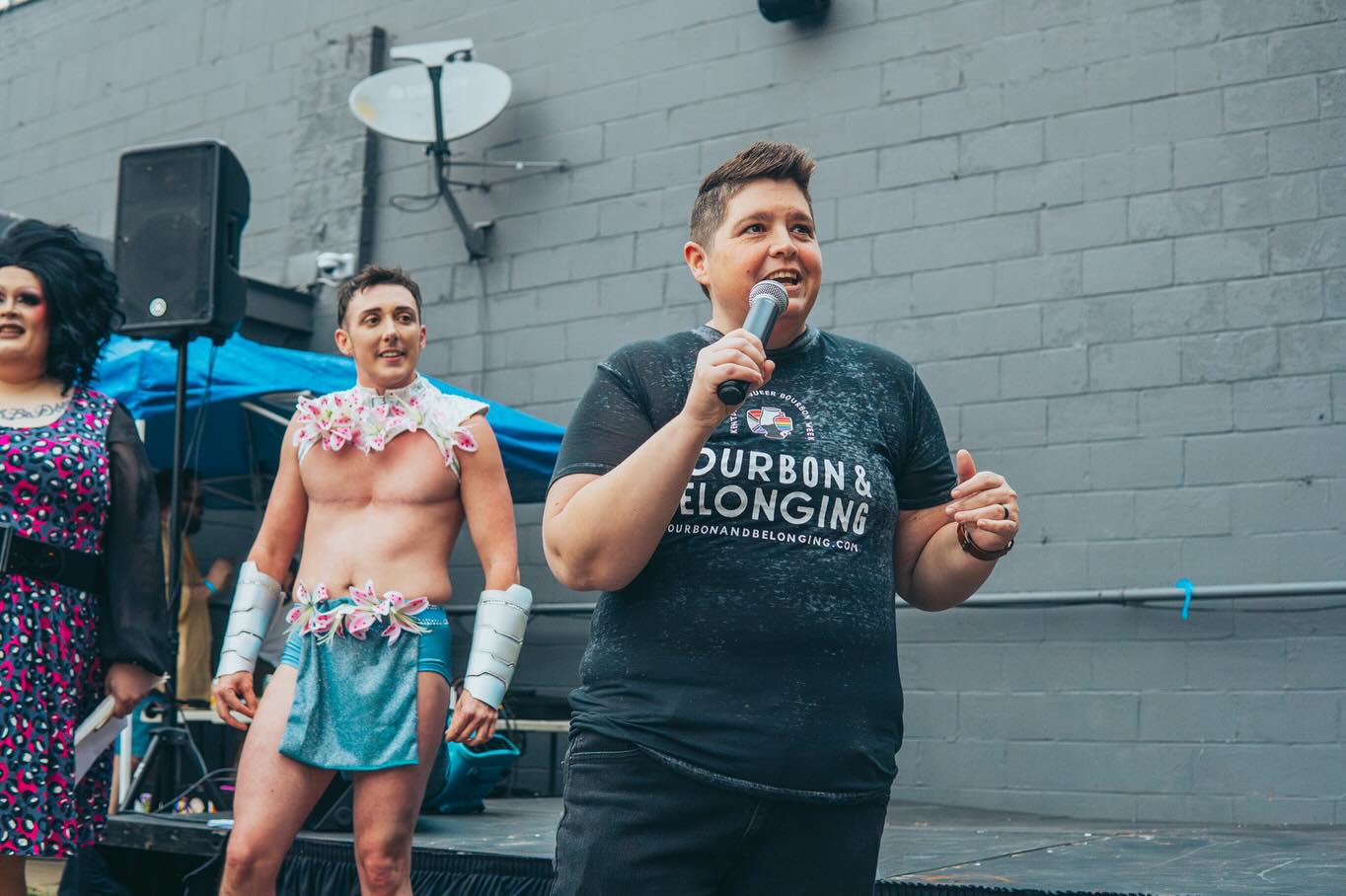
“I’m a queer kid with a traumatic childhood, we end up really funny.”
For activist Missy Spears, comedy is ever-present. A viral moment of social media posts poking fun at a public mishap. The way a politician vehemently denies silly allegations purported by The Onion.
“I apologize for him,” Spears says, as her cat waltzes into her camera. “He’s very emotional.” Political satire surpasses species, as she helped the animal department fix 40 cats under her first self-led, community project – a TNR campaign “Cut Your Balls Off Covington.”
There’s always room to work, too. “I wrote a grant for $500 to get those cats fixed,” Spears said. “My background is from running my own projects in the community for eight years. Then I worked at one nonprofit for a year and consulted for another.”
Humor, she says, opens more doors than tough talks or too-long-didn’t-read social media posts. What was once cheeky political satire has turned into a life dedicated to elevating LGBTQ+ communities. “At first, it was just saying things on the Internet that other people were too scared to say to see if I could forward along or force conversations, then it turned into finding ways to raise money for causes,” Spears said. “Humor can be a good BS barometer.”
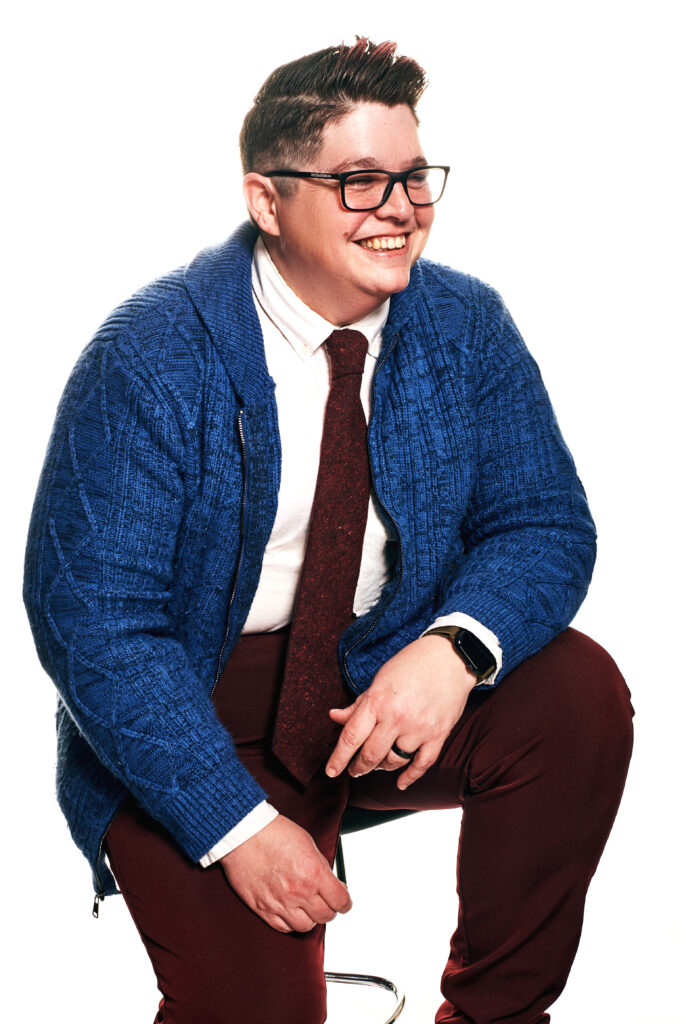
It adds an edge to Missy’s decade of advocacy through an indomitable work ethic, people-first attitude, and multi-faceted leadership as executive director of Queer Kentucky, the state’s only LGBTQ+ newsroom.
LOL, JK
Spears was always politically engaged, including establishing a pantry with local queers in Covington and raising funds for queer-related causes.
A jokester at heart, she created a local “Cards Against Covington” parody of Cards Against Humanity in 2015. “This was just one example of using satire to call attention,” Spears said.
The party-favorite tests gamers on how quirky and crass they can be, compiling answers that turn historic misfortune into comedic oddity. Using real-life events of Covington, Kentucky’s history, the game poked fun at local entities such as University of Cincinnati naming its practice field after well-known racist Marge Schott and the city’s brash history of redlining.
“We sold a couple thousand of them throughout the city in a relatively short time, and it was…. an effective way to at least start a conversation.”
Spears witnessed an accidental synergy that created and rallied folks to sharpen their political education.
“Progressives were on an upswing of power, the Obergefell v. Hodges opinion, and the Me Too Movement was just about to take off,” she said, calling the 2010s a “perfect storm” of pop culture for political jabs and collective accountability.
The game’s reception influenced city officials to speak with Spears to clear up any misconceptions about their work and their current goals for the city. In turn, Spears became a trusted community source that Covington and neighboring cities could engage with. “I realized very quickly when I started to say things on Facebook, enough people would comment that a city official would respond to my page,” Spears said. “It was the power of people talking about these folks and poking fun at things would make them pay attention and sometimes change. That’s where and how I built my network; I just made fun of so many politicians that they would have meetings with me and form relationships.”
What Can Grow Bigger From This?
In March 2018, Spencer Jenkins created Queer Kentucky as a means of blog-era storytelling through vibrant magazine writing. But, as attacks on trans communities accelerated, Queer Kentucky’s mission matured.
“I also never thought my little queer blog would develop into a sustainable nonprofit recognized across the globe,” Jenkins said in a 2023 statement released by the Northern Kentucky Tribute.
Recognizing Spears’ outreach, advocacy and effectiveness, Jenkins announced her as executive director. Under Spears’ leadership, fun, buzzing moments evolved into hard news that queer Kentuckians could be educated and informed by.
“Our focus on queer health, particularly queer physical and mental health, cultural health, and civic health, is coming at a crucial time for an at-risk population that has been under attack for quite some time,” Spears said in the announcement.
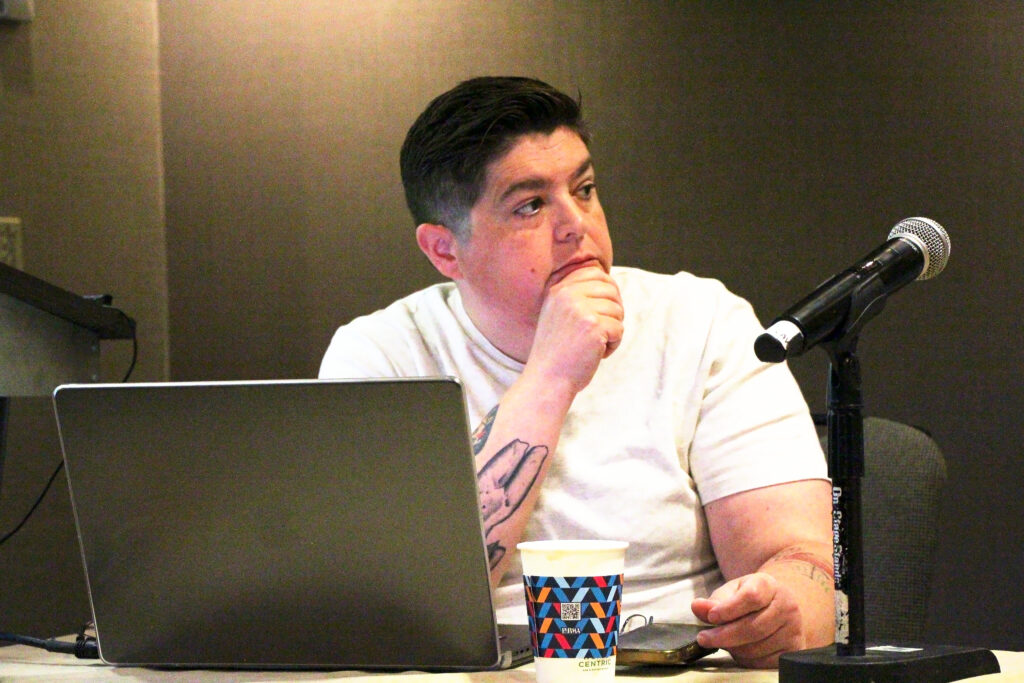
The stories Queer Kentucky tells, she says, not only dispel harmful misconceptions, it unites queer pockets of the state by prioritizing the needs and future of their communities. Three years later, recent stories include stories surrounding a police officer’s multiple federal lawsuits and a how-to guide on where to find HIV-competent doctors throughout the state.
“As long as you know your community, you can figure out what stories people need,” said Spears. “It’s why we launched a research project in 2024 with The Moore Lab researchers who helped us track the lived experiences of Kentuckians including discrimination, health access, and questions about HIV and PREP+, substance use and harm reduction.” Their coverage has earned recognition from GLAAD, including two nominations for Outstanding Independent Journalism and Best Print Article.
Given the newsroom’s success, Queer Kentucky shares the gospel to whoever’s willing to listen. Spears, along with fellow newsroom leaders, appear in journalistic spaces to discuss their success in niche storytelling.
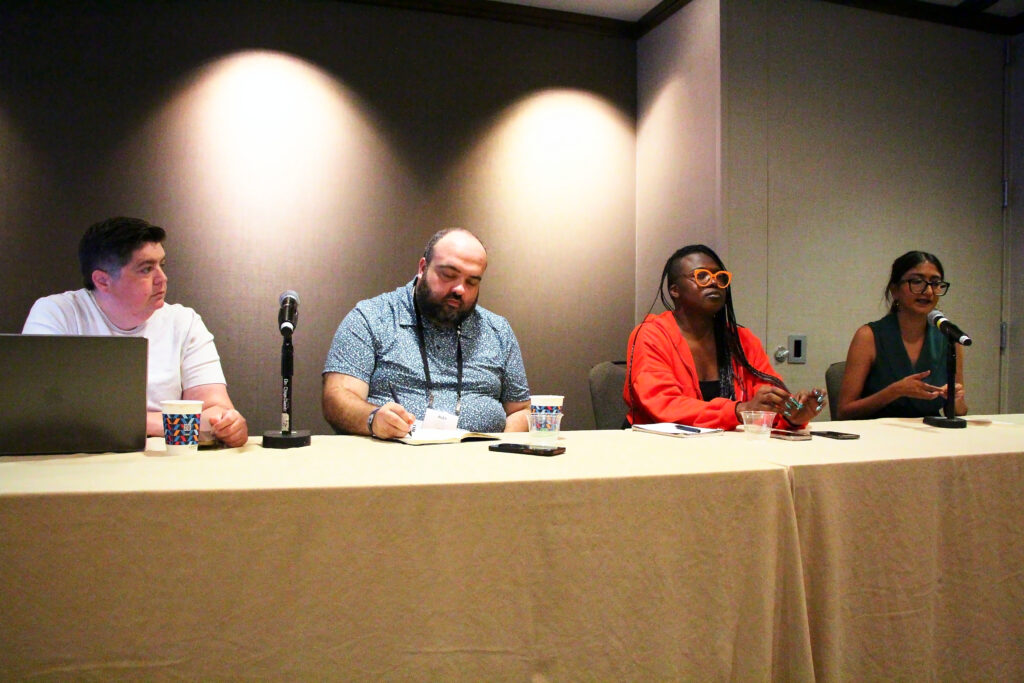
“It’s been incredible to see us get writers from The Advocate, The Hill, and Washington Post writing for Queer Kentucky, but we still have folks born and bred in Kentucky that have no journalism experience like myself,” Spears said. “I love it because it’s like no one can tell the story better than someone that’s living there for a lot of these things.”
While 2027 looms, Spears has started counting down the days until Creating Change. She’s using her role as an ambassador to spread the news of The National LGBTQ Task Force coming to town, while encouraging Kentucky’s regional organizations to work together during the largest LGBTQ movement skill-building event.
“They get to learn from organizations that have more resources and ask; what have they found that worked? What skill sets or software could they tell us about? Is there anything that we can take from what they’re doing and scale it down? I would really love for folks outside of Kentucky to attend Creating Change to question their own stereotypes about red, Southern states,” Spears said. “I also really hope they learn how to pronounce Louisville.”