Election post-mortem: a racial justice call to action
By Task Force Movement Building Department, November 12, 12:21 pm
The post-mortems on the anti-marriage ballot question campaigns in California, Arizona and Florida roll into our e-mail inboxes.
A laser-like focus turns toward the voting patterns of African-American voters in California and the role of these voters in the passage of Proposition 8.
This commentary is inspired by events in California’s Prop. 8 campaign, but we do not seek to analyze voting data or campaign strategies. As LGBT organizers, we face an important task: How can we actively build trust and relationships so that people of color, including those who are part of the LGBT community, are assured that we will all stand together on racial justice issues as we ask people of color communities to stand with LGBT people on LGBT issues? We should all be able to bring our whole selves to the table.
Often, within the LGBT movement, we expect that communities of color will “be there for us” in a common struggle for justice and equality. Yet, often enough we don’t show up to substantively support the struggles of communities of color without expecting anything in return. For example, anti-affirmative action measures were on the ballot and did any of our LGBT dollars go to fight those? Achieving justice is a reciprocal process that requires that we show up to support one another’s struggles.
Showing up is only half of the picture. The broader LGBT movement has not sustained a commitment to building multi-racial relationships and trust. Trust creates the possibility for authentic partnerships that can move movement-building work in the broadest possible way and is led by people within their own communities of color. We can’t expect other movements to do their work on homophobia and heterosexism if we are not willing to do the hard work and deep reflection on a broad range of issues affecting LGBT people.
We believe that unless LGBT organizing in all communities is continuous, rather than crisis driven, we will repeat our history of losing on ballot questions on LGBT issues. Further, LGBT organizing, decision-making structures and leadership roles need to change in order to ensure that people of color are not tangential to setting the current and future direction of the LGBT movement.
We urge a racial justice call to action that includes the following proactive commitments by white LGBT organizers:
First, we have to challenge the assumptions in the media that scapegoat African-American voters for the passage of Proposition 8 and ask ourselves what role racism has played in the quickness to seize upon African-American voting figures, while other demographic groups also supported the measure. This kind of scapegoating of voters is divisive and unjust because it creates more distrust and more suspicion among the very people LGBT organizers of color need to reach: members and leaders of their own communities. It also creates an environment in which communities of color, even LGBT people of color, become alienated from the LGBT movement because they are consistently held to a different standard by our movement.
Second, white organizers must intentionally and in a dedicated way take seriously the ways that unaddressed personal racism and race-based assumptions impede organizing. Yes, get thee to an anti-racism training, friends! Let’s learn how attending to our own internalized racism can bring new awareness to our work with colleagues of color.
Third, predominantly white-led LGBT organizations must appreciate that the most effective anti-homophobia work in communities of color is done by LGBT people and allies from those communities. It is nearly always the case that the best messengers are those who are closest to the receiver of the message. Our own LGBT people of color leaders are the bridges to straight allies; the straight allies they mobilize are the bridges to unsupportive straight people of color.
Fourth, white organizers and white-led organizations need to play an active supportive role to organizers of color and that begins with listening to our colleagues of color. There are important and distinct characteristics of LGBT communities, depending on race, ethnicity, disability, cultural traditions, religious beliefs and socioeconomic levels. White organizers need to step up to learn about these important differences and also need to step back to allow organizers of color to take the lead in their communities of origin and in the broader movement.
Fifth, to the extent that LGBT organizations nurture and mentor new and veteran leaders, more resources are needed to nurture and mentor leaders of color. As well, we must ensure that leaders of color who are fully prepared to take leadership are not systematically shut out of decision-making roles. As a movement we are often unconscious of and/or resistant to taking the time and care that is needed to build truly multi-racial teams to move our movement building work broadly and deeply throughout communities.
Sixth, enduring relationships and alliances must be built among LGBT-supportive faith leaders and those faith leaders of color who spoke out in support of Prop. 8 and other anti-LGBT ballot questions. The white led right-wing anti-LGBT movement has effectively and consistently reached out to faith leaders of color, understanding the power of church-based organizing in communities of color.
Seventh, the staunchest political allies of the LGBT movement are elected officials and political leaders of color. LGBT organizers turn to these elected leaders first and most frequently when we are under attack. The most supportive group of Congress members, for instance, is the Congressional Black Caucus. Trashing and scapegoating African-American voters will do nothing to support our elected leaders who are African American and LGBT allies.
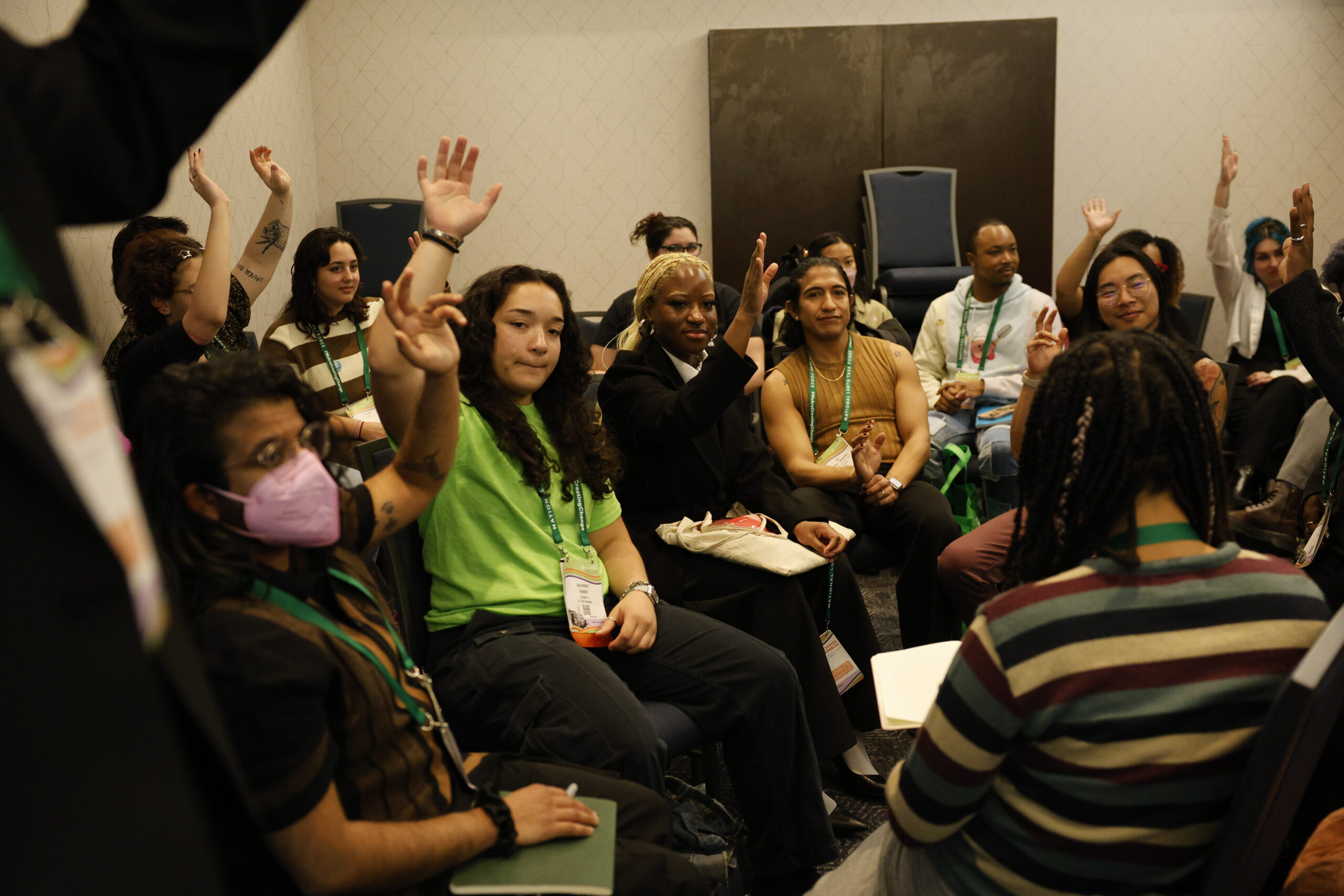
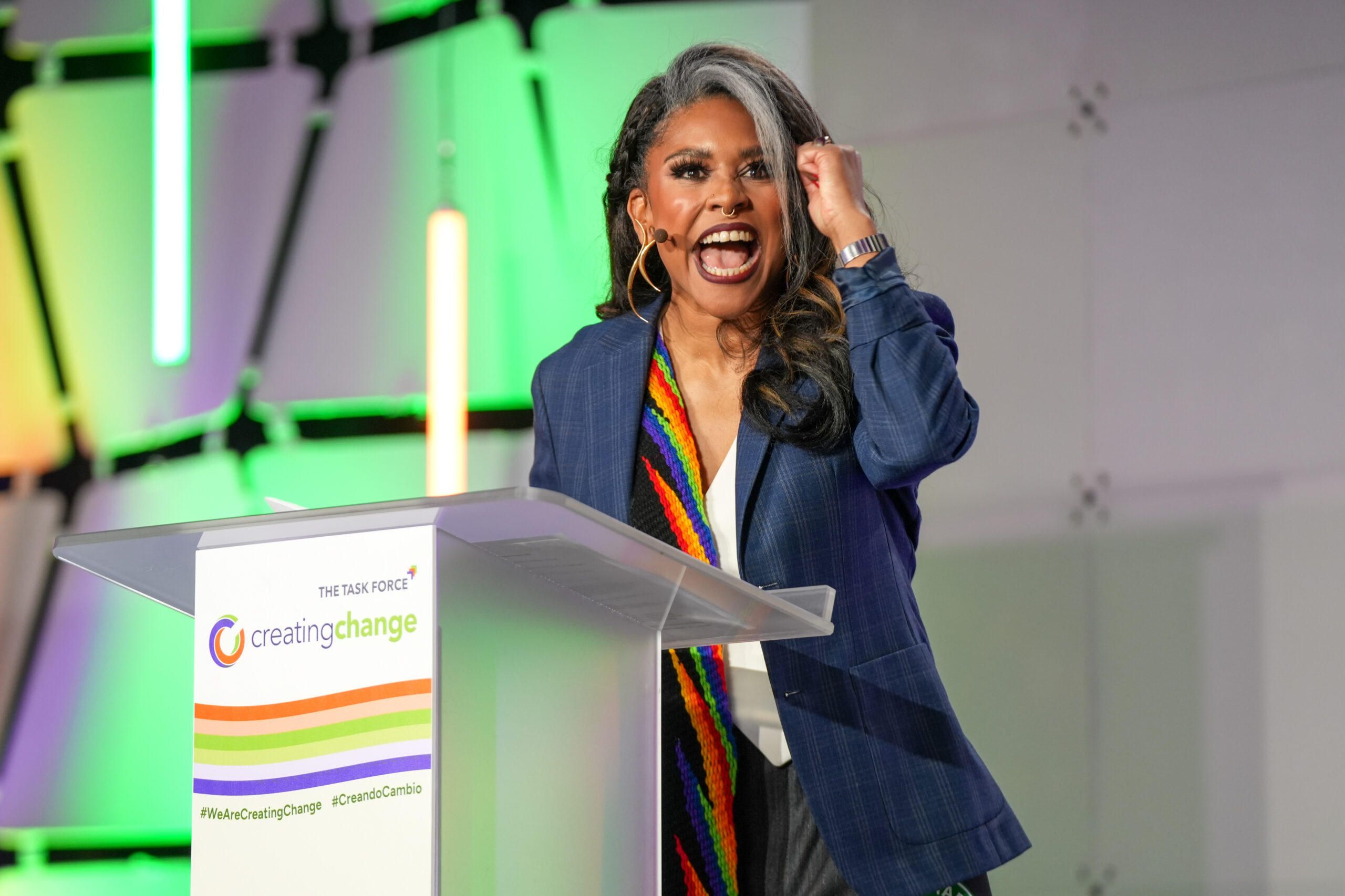
Learn how to create change! We invite you to attend The 21st National Conference on LGBT Equality: Creating Change, convening in Denver, Colo., Jan. 28–Feb. 1, 2009. Gathering just one week after the inauguration of our country’s first president of color, Barack Obama, Creating Change offers a menu of trainings and workshops that will build your skills and open your minds for the work ahead. It will include anti-racism trainings, organizing trainings, debriefs on the California campaign, sessions by, for and about people of color and leadership sessions. Don’t miss these five full days of movement building, provocative thinking and vision leadership. Get details or register at www.CreatingChange.org.
Lisa Weiner-Mahfuz is the National Gay and Lesbian Task Force’s director of capacity building, and Sue Hyde is the director of the National Gay and Lesbian Task Force’s National Conference on LGBT Equality: Creating Change.
Want to share your thoughts about this blog entry?
Send your comments to OutSpoken@theTaskForce.org.
Please let us know how your name should appear and, optionally, your city and state. Comments may be posted on our Web site and used in other Task Force materials.
Wednesday, 11/12/2008, 7:32 PM (EST)
Give me a break! What legitimate political movement would ever say "This commentary is inspired by events in California’s Prop. 8 campaign, but we do not seek to analyze voting data or campaign strategies"? The ONLY way to counteract the opposition is to know who they are, why they voted the way they did, and what can be done to counteract their homophobic positions! This idea that the only way to win them over is some tit-for-tat strategy is ludicrous. Why do we sink so low that we must compromise our position by saying "well, I guess we didn't do enough for them so that's a legitimate reason for them to not support us." Can we possibly project more inferiority?
Chris Israel
Wednesday, 11/12/2008, 8:31 PM (EST)
This is a great post. Thanks for writing it. There’s one point I raise in my own blog on the issue that you don’t mention here.
A lower percentage of LGB people voted for Obama than voted for Kerry in 2004. All groups by gender, race, and religion had a higher percentage supporting Obama than Kerry. What does this say about gay people? What is a person of color to think about gay people looking at this statistic? Is there something other than racism that accounts for this? Plus, let’s hear it for Alex Blaze at Bilerico for noticing that a higher percentage of whites than blacks supported the ban on adoption by unmarried couples in Arkansas, but no one is using that as a basis to decry white homophobia.
Nancy D. Polikoff
Thursday, 11/13/2008, 1:59 PM (EST)
With all due respect, I have never read such a concentrated dose of PC bullshit in all my life.
You’re damn right “we expect that communities of color will be there for us” when there is a specific equality ballot measure like Prop. 8. And we have every right to expect that such communities would at least break pro and con in the same proportions as the general voting public, especially when such communities have had as many experiences with state mandated discrimination that blacks (and Latinos) have had over the years. During our amendment fight in Virginia in 2006, the black community voted in nearly identical patterns as voters in general, so believe it or not, all black voters are not the same.
The comparison of Prop. 8 with anti-affirmative action ballot measures in other states is absurd, unless you’re simply trying to lump all whites and all blacks together and then make stereotypical assumptions about all of them. The fact is that straight blacks in California have the marriage rights that the GLBT community is now fighting for, so we were in fact seeking the same legal relationship rights THEY ALREADY HAVE. Your statement that communities of color are held to a different standard by white GLBT activists is simply bizarre.
“This scapegoating of [black] voters is divisive and unjust.” What is divisive and unjust are the excuses you and some others make for black homophobia. We don’t make excuses for white homophobia. We don’t soft peddle the homophobia of James Dobson or Jerry Falwell or white evangelicals, yet now we’re supposed to say it’s ok and perfectly understandable when blacks exhibit the same views. You may think these patronizing excuses are somehow progressive. They are not. They are simply embarrassing and very condescending.
And your explicit warning that only blacks can talk to, or should talk to, the black community about this issue is outrageous. Just imagine if white activists said the reverse about people of color trying to talk to white voters about an issue. The No on 8 folks didn’t screen their activists for the proper skin color before they went off to fight for equality, but apparently that was a mistake in your eyes rather than the genuine color-blindness that most people think is the goal.
It’s really quite a shame that even as our community still has such a long way to go in reaching a wide spectrum of voters with a simple message of legal equality that your organization wastes so much money and effort trying to suck naïve members of our community into a leftist “social justice” movement that has nothing to do with achieving the goal of equality of rights for all.
David Lampo
Thursday, 11/13/2008, 5:06 PM (EST)
Right on, Task Force!
As an immigrant, queer, and working class Latina – also an educator and activist – I can personally share a number of incidents of covert/overt discrimination experienced/witnessed within queer organizations. Much like first wave feminists, I was puzzled to see that we were fighting for visibility without fully integrating the voices of our underrepresented brothers and sisters. Because of such experiences I transferred my womanpower to more inclusive initiatives for many years. But this new wave of awareness brings me much hope... We now seem to realize that some of us in the movement (locally, regionally, and nationally) are not even aware of our own prejudices and condescending attitudes towards certain populations, which further highlights the dire need for “anti-isms” training in our organizations (i.e. sexism, racism, classicism, ageism, etc). Right on, Task Force!
I truly appreciate this timely call to action and will spread it widely. May we begin to develop a comprehensive agenda addressing the concerns of people of color, immigrant families, and working people of all colors!
Renata Moreira