The Task Force was again invited to play a role in the annual LGBTQ+ Journalists Association convention – this year celebrating its 35th year in the city it was founded in, San Francisco.
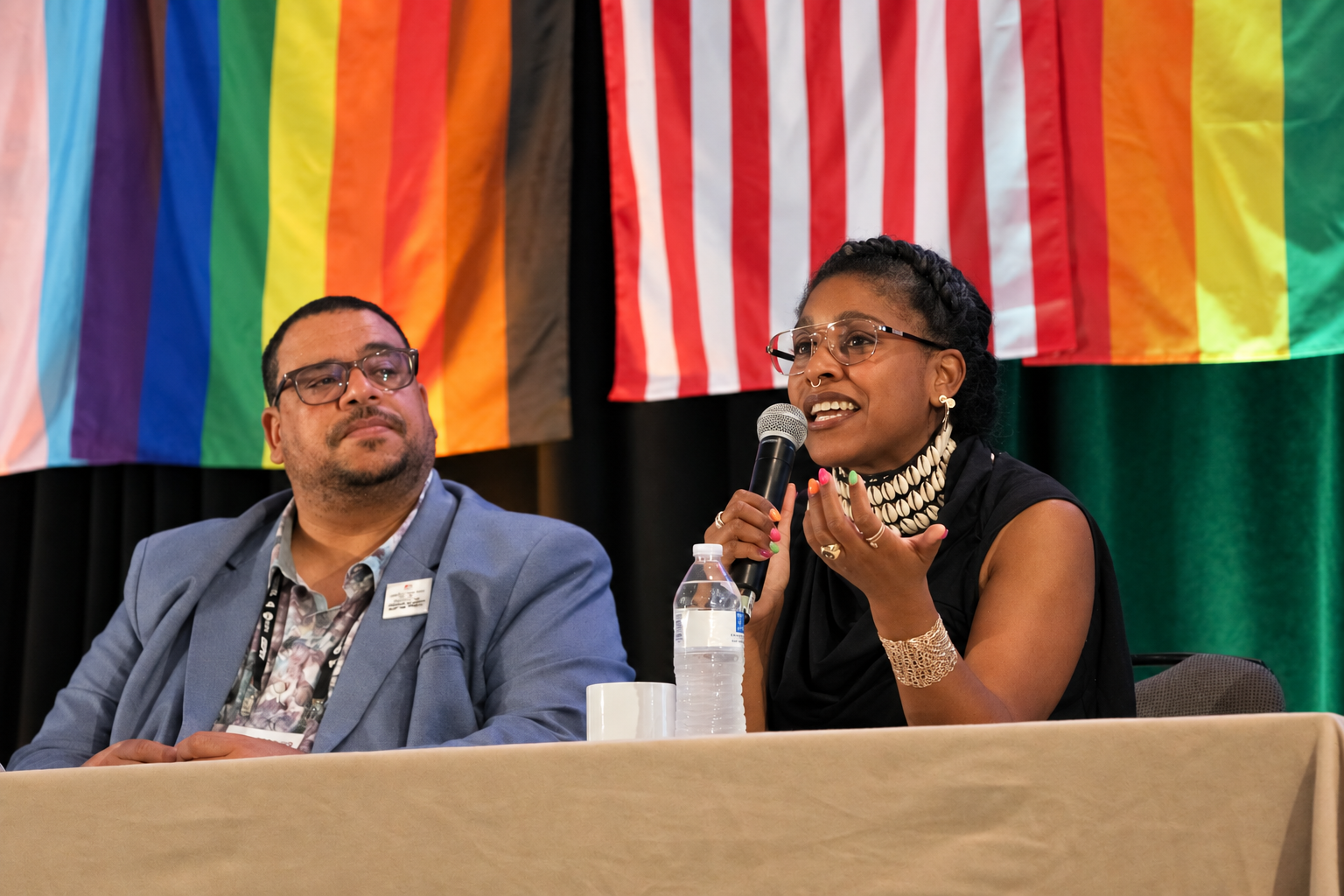
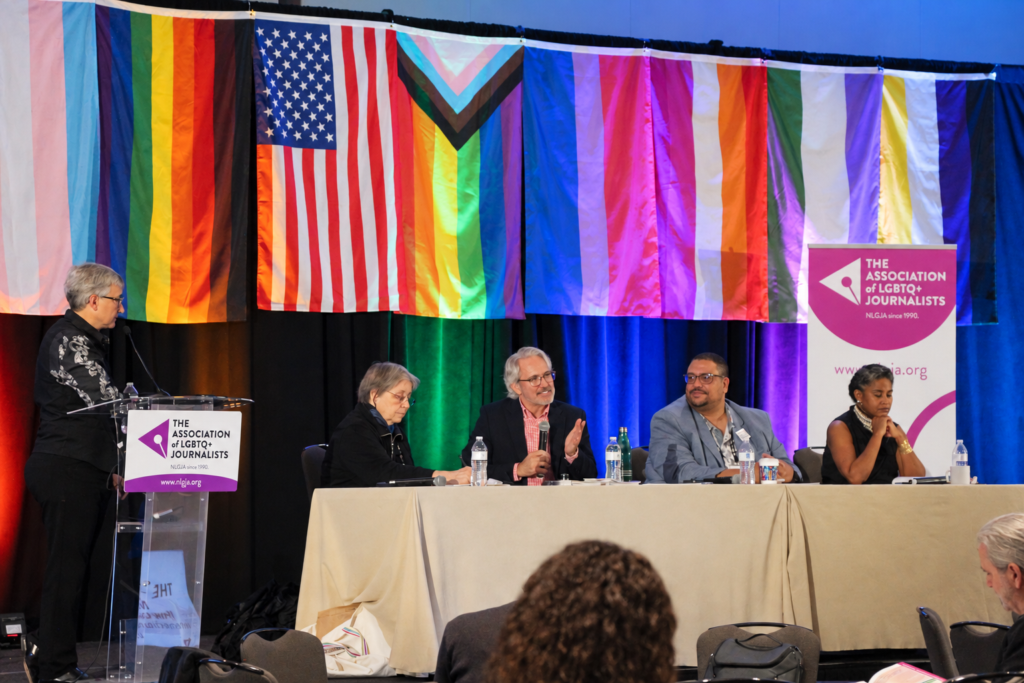
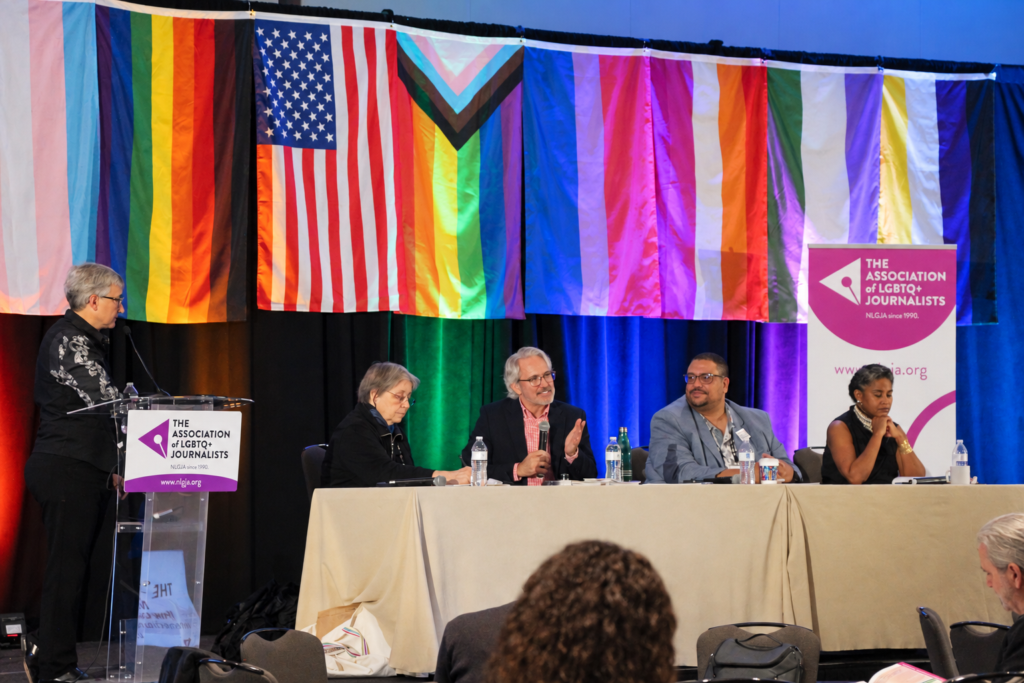
The National LGBTQ Task Force President Kierra Johnson and Cathy Renna, director of communications, participated in the featured Michael Triplett plenary “The Road Ahead Has Many Paths: How Can Media Meet at the Intersections of Faith, Gender, Race and Class?”
Renna moderated as three panelists joined Johnson:
- Christopher Wiggins: The Advocate’s Politics & News Editor
- Jason DeRose: National Public Radio’s (NPR) longtime Religion Correspondent
- Caitlin Ryan, Ph.D., ACSW: a clinical social worker and LGBTQ+ youth expert whose 50 years of service has helped over 130,000 families, providers and religious leaders through the Family Acceptance Project. The project provides foundational evidence-based research.
“There is a gap in telling our history, and that’s by design,” said Johnson. “It’s easy to believe that religion equals conservatism, but how do we integrate that complexity of what it means to live religiously as everyday people? The reality is that queer people I know actually identify as people of faith. How do we tell that story?”
Faith’s Hidden Function
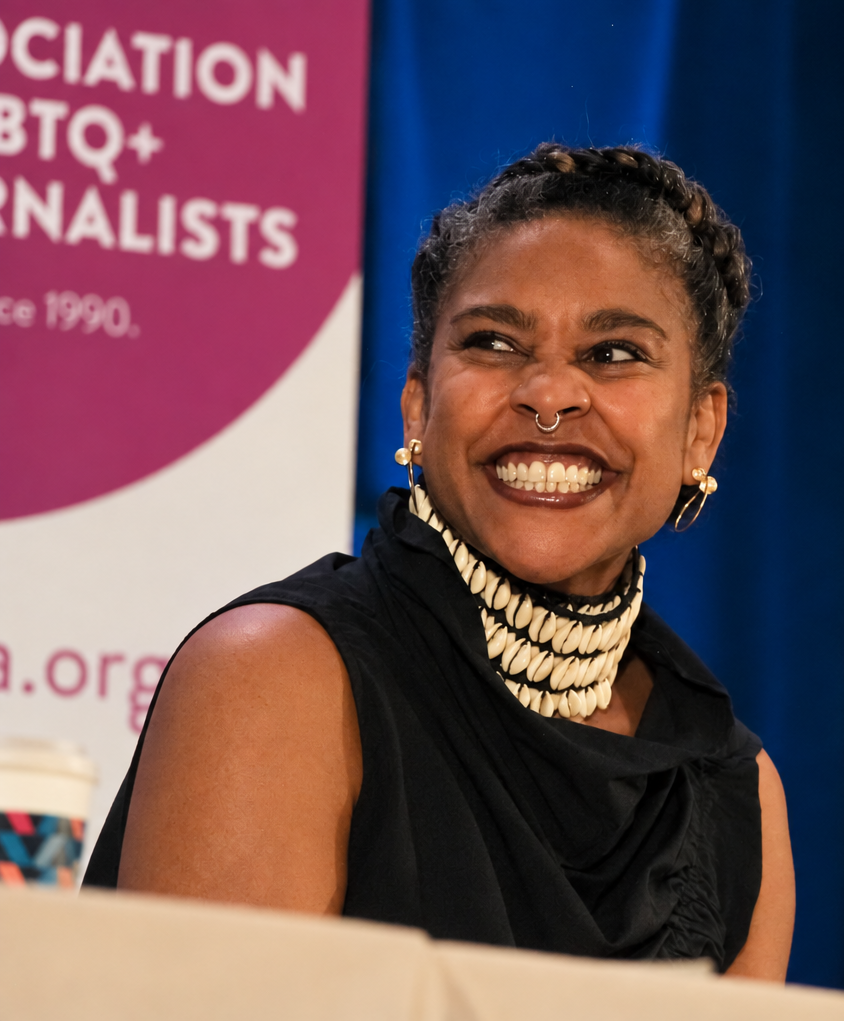
Johnson opened her remarks describing faith as a critical pillar of the Task Force’s work, citing how the media enables the dehumanization of LGBTQ+ communities through reporting featuring anti-queer voices. “We understand the importance of non-binaryness,” Johnson said. “One of the most important things that you all can do right now is disrupt the binary ways in which we are being forced to tell the story of ‘us.’”
The production of fair, balanced queer stories of faith, Johnson says, is an opportunity to engage more folks in LGBTQ+ advocacy through religious institutions. “Queer people didn’t forsake religion. Religion forsakes us,” Johnson said. “When we talk about faith institutions, they have an opportunity to be home to so many folks that are hungry for a place to lay their hat, grieve, find community, and spiritual health, but only if these institutions are willing to evolve and meet the moment.”
Ryan called on journalists and NLGJA to use their platforms to diversify religious narratives around queer acceptance. Because most familial rejection is based in religion condemnation, Ryan described the mental effects of exclusion on queer youth, especially the lack of positive stories in media.
“What we try to do is engage the parent and caregiver as a change agent and help them slowly modify behaviors that are putting their child at risk so they can learn the truth and reality about their lives,” Ryan said, citing the educational resources The Family Acceptance Project provides parents also include news stories on LGBTQ+ life.
Reporting becomes affirming narratives that queer children’s communities can cite for understanding.
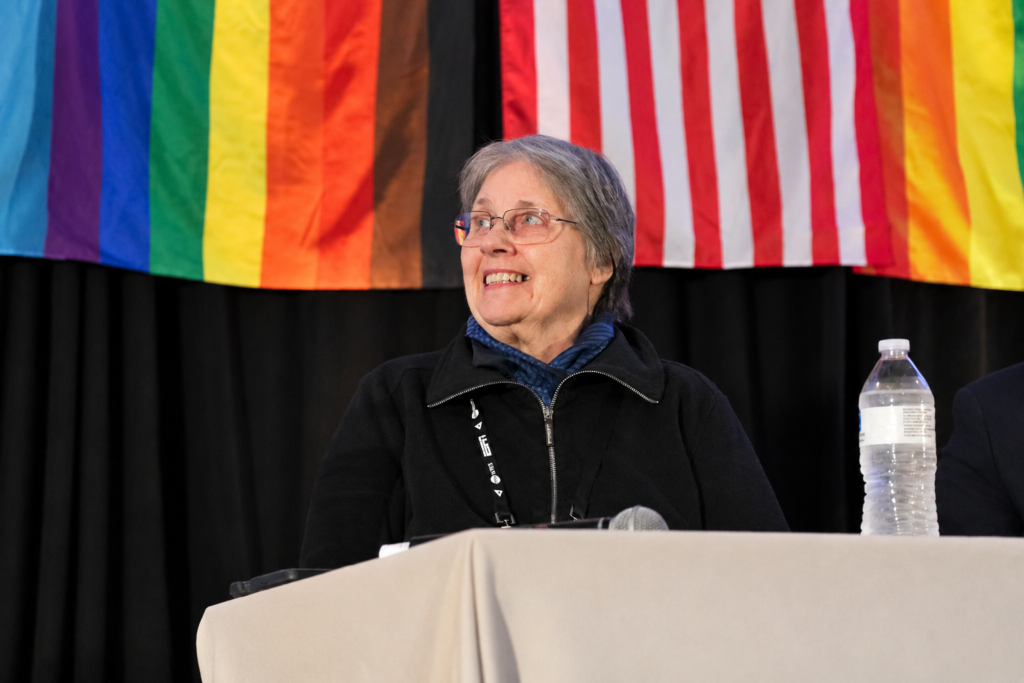
“The biggest challenge, I think, is the lack of imagination in how we’re telling these stories of change. We have to correct how we engage our young people and what we tell them is possible,” Ryan explained. “We have to get this information out, we have to tell the story of change and the possibility that families can grow and change.”
Gays Are Religious Too
DeRose began the discussion recognizing how religion and queerness are antonyms in media coverage due to how common religious trauma is in LGBTQ+ communities.
“What I see a lot on cable news is a LGBT person and then a pastor having an asymmetrical conversation. I think, in the mind of the producer who put the panel together, there are secular queer people and there are religious conservative straight people,” said DeRose, whose coverage includes evangelicals’ continued attacks on same-sex marriage and gathering Christian therapists and LGBTQ+ folks’ opinions on the Supreme Court’s conversion therapy ruling.
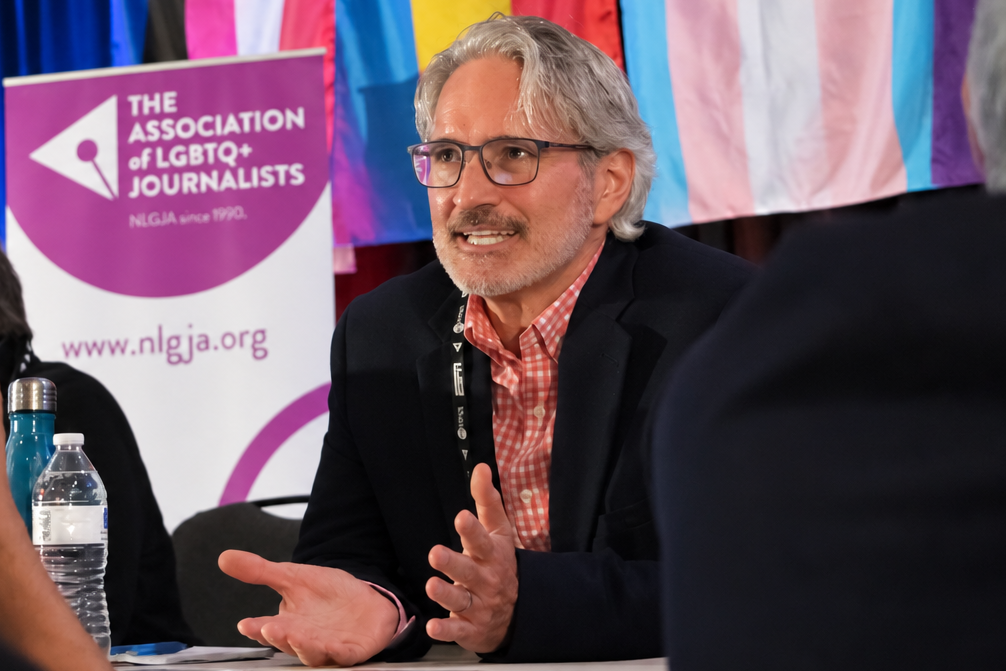
“What I try to do in my reporting is really highlight the internal diversity within these groups. If you’re going to have a conversative pastor, you also need to have an Episcopal priest who’s going to talk about why their church has been very open and welcoming for decades and decades.”
Wiggins seconded DeRose’s need to dispel religious followers and LGBTQ+ folks as opposed groups, referencing his coverage of Rev. Dr. Philippa Phanuef, a New York pastor who came out as a transgender woman in 2025 to her North Chili United Methodist congregation.
“People on the right assume that this community doesn’t have any faith or isn’t invested in their faith, and that creates a lot of conflict in our reporting,” Wiggins explained. “When I assign a story to someone who’s talking about something religious, and it needs to get comment from conservative groups, [conservatives] won’t engage because of the assumption that “these people” will disregard their religion.”
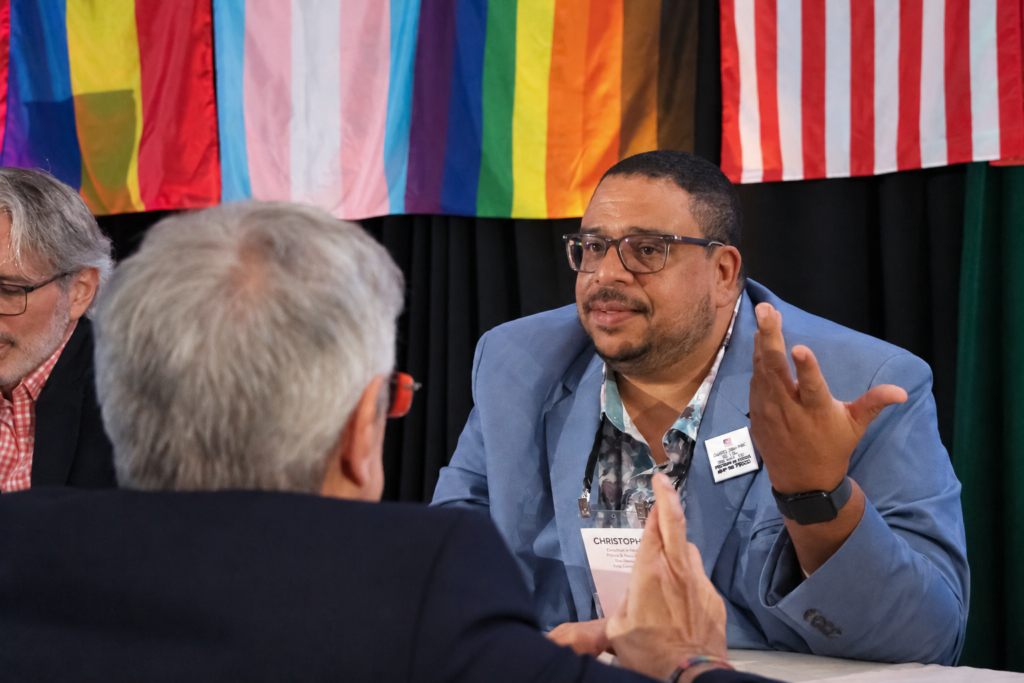
Wiggins continued, explaining that when religion and queerness are viewed as contradictions, it hurts institutions located in populous LGBTQ+ areas and founded on queer acceptance. “You have to be really careful in understanding that there are people in this community who have had a really difficult time with religion, who’ve grown up in their faith and were rejected when they came out,” Wiggins said.
He referenced his time covering The Vision Cathedral of Atlanta. Led by Bishop O.C. Allen and his husband, First Gentlemen Rashad Burgess, Wiggins described his Vision experience as “welcoming and diverse,” given Atlanta’s historically Black and queer population as a city residing in America’s Bible Belt. “I thought to myself, ‘Well this is something I didn’t think religion was,’ …it was incredible, and it opened my eyes to the opportunity and possibility of people being part of the LGBTQ community, regardless of traumas they’ve felt.”
About The National LGBTQ Task Force
The National LGBTQ Task Force builds power, takes action, and creates change to achieve freedom, justice, and equity for lesbian, gay, bisexual, transgender, and queer people. As the progressive voice of the LGBTQ movement and the LGBTQ voice of the progressive movement, the National LGBTQ Task Force organizes people and money in pursuit of liberation for all.
About NLGJA: The Association of LGBTQ+ Journalists
NLGJA: The Association of LGBTQ+ Journalists is a journalist-led association working within the news media to advance fair and accurate coverage of LGBTQ+ communities and issues. We promote diverse and inclusive workplaces by holding the industry accountable and providing education, professional development and mentoring.