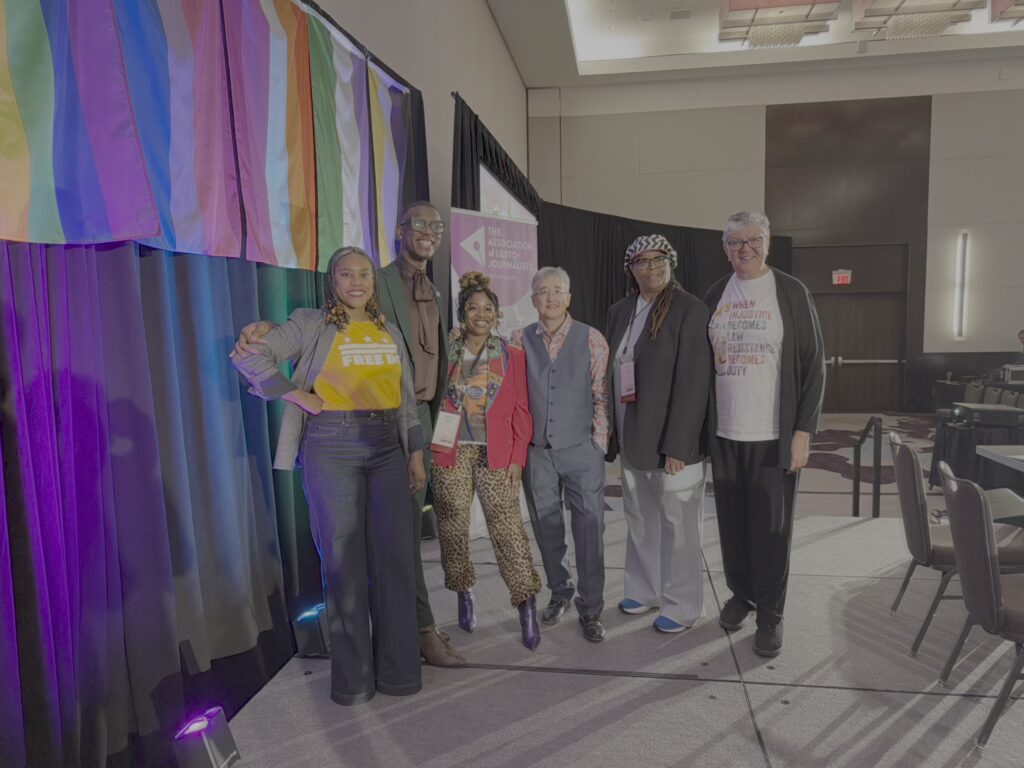
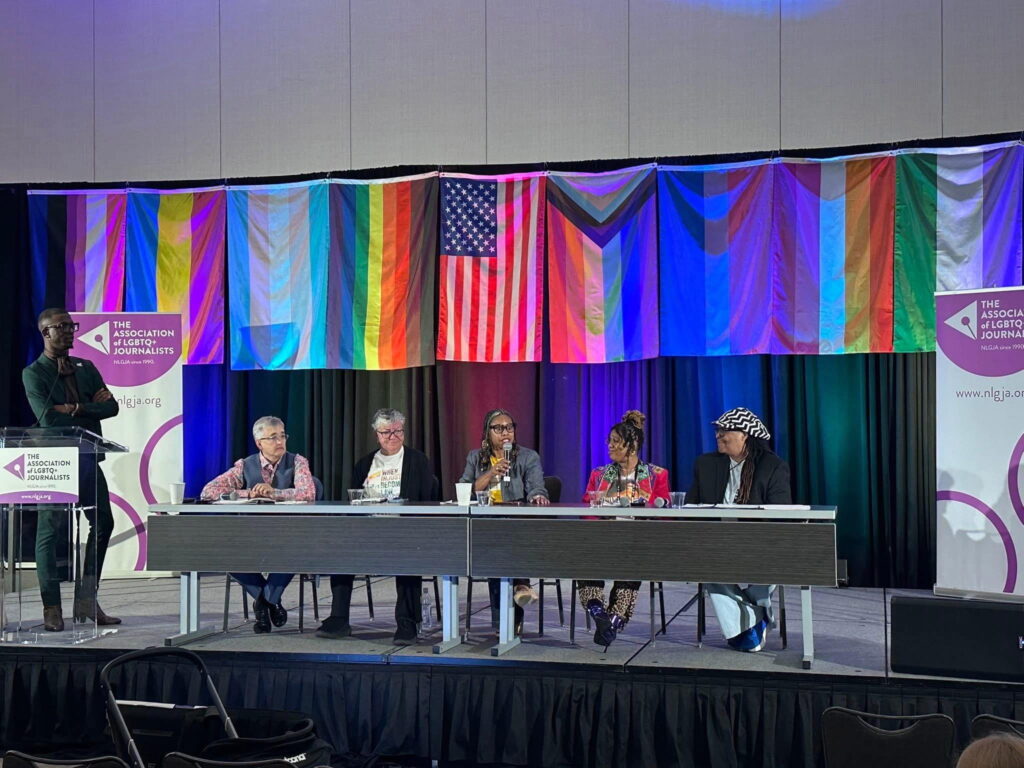
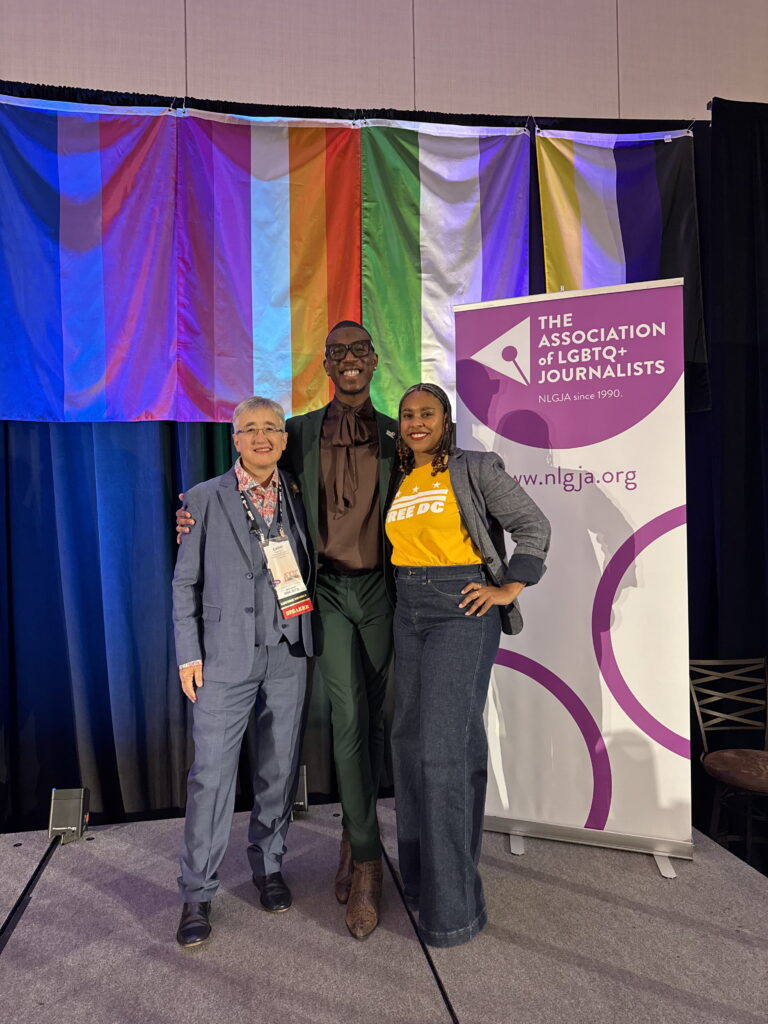
Three staff members of the National LGBTQ Task Force returned to the annual NLGJA Conference in Atlanta, organizing and participating in a plenary “Not Our First Fight: What Can We Learn from Other Social Justice Movements and Longtime LGBTQ+ Advocates.” The session discussed the layered approach to queer advocacy today and how the past informs the future.
The panel included:
- Kierra Johnson: President of the Task Force
- Cathy Renna: Communications Director of the Task Force
- Sue Fulton: a former U.S. soldier who played a role in removing the ban of gay service members from the military and repealed the “Don’t Ask, Don’t Tell” clause
- Penelope French: executive director of Neighbor, activist and cultural organizer whose work centers on healing justice for LGBTQIA+ communities
- R. Darlene Hudson: a health educator with a 30-year career that includes serving as a health educator for the Arkansas State Health Department, a social worker in Atlanta, and a member of former Atlanta Mayor Keisha Lance Bottoms’ LGBTQ+ Advisory Board.
Benjamin Coy, the Task Force’s Marketing Campaign Manager, served as the moderator of the panel.
The plenary session delved into topics of intersectional movements, the next generations of queer leaders and their strategies, and the purpose of coalitions to grow a stronger front for liberation. Trust between queer communities and the media, along the importance of queer journalists covering queer stories, were also part of this conversation.
Framing the Moment: How Past Movements Inform Today’s Resistance
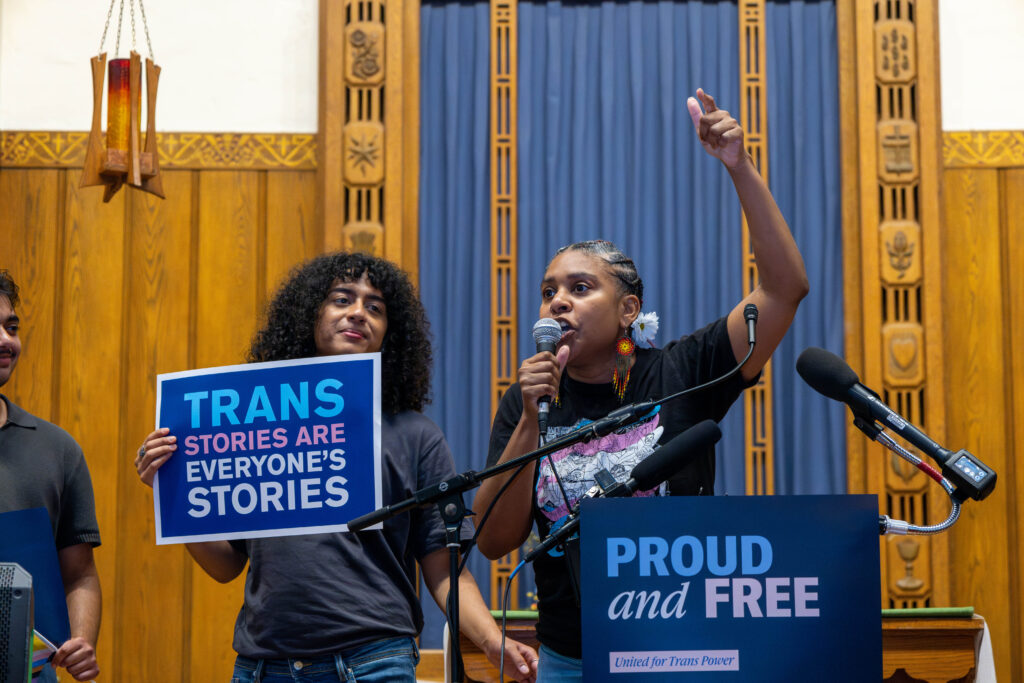
Johnson spoke to the Task Force’s national influence in queer and progressive advocacy spaces, highlighting the work done in target states North Carolina, Texas, and Florida. including our work in Washington D.C. at Capitol Hill. Earlier this summer in the nation’s capital, Johnson spoke at a rally at the Lutheran Church of the Reformation after the Supreme Court ruled in favor of Skrmetti v. U.S., which bans gender-affirming care for trans youth.
With smaller movements taking shape in these states, Johnson emphasized the need to draw inspiration from the decades-long advocacy and victories won throughout history.
“People who’ve already lived in authoritative, fascist states already have wins under their belts. We made it through and we’re still here to make it through another one,” Johnson said. “It’s a net positive that we are not starting from ground zero, we’re already a step ahead of where we were. When I think of it that way, I feel really motivated to fight in a different way. There was a fight beforehand that I can learn from.”
“If we look back at those different parts of our history from our cross-dressing communities, it wasn’t like they showed up to the capital and that was it. It was ongoing” French said, who echoed Johnson’s statement of passing activists strategies and lessons to strengthen today’s fight.
Renna commented on the increase of safety issues in media coverage, including the need for anonymity of individuals being interviewed, particularly trans youth and families. “It’s heartbreaking to once again have to work with journalists in this way, requesting anonymity or first-name only identification of sources, as well as not sharing geographic information,” Renna said. “This is reminiscent of the years when people with AIDS, active-duty service members, and LGBT people facing discrimination could not safely be open in the media as well.”
Queer journalists are also in danger, as heightened threats against them and events they attend continue with bomb threats. Security breaches are also affecting queer-led organizations as well, as hacking efforts have consistently grown over the course of the current administration’s laws targeting queer communities.
Local, State Activists Chime In On Media’s Role in Resistance
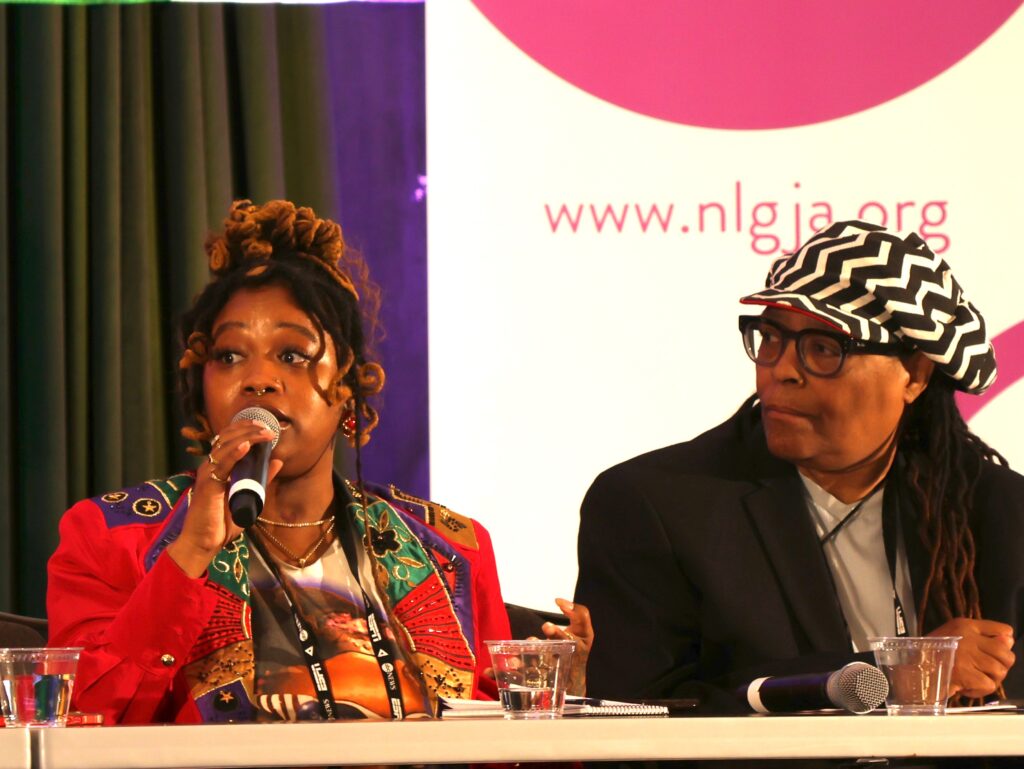
With Hudson and French sitting on the panel as local figures of the plenary, their insight granted a look into Atlanta’s on-the-ground queer movement and with other neighboring Southern cities, including how their work is covered in media.
Hudson spoke to NLGJA’s audience of journalists and encouraged reporters to collect personal experience and testimony in their news gathering methods. Narrative centers the agency, experiences, and livelihood of queer people as Hudson named how her identity shapes her treatment.
“Speaking to you all as journalists, please remember that the most powerful thing a person has is their experience of living.” she said. “When I hear [the plenary title] not our first fight, I think about the fact that I am a Black queer person and I come from a lineage of people who had to consistently fight and we’ve had to center that fight in the history of this country. When I think of all the fights that are happening, it makes me think ‘I’m used to this’ and that’s the reality for a lot of people.”
Fulton critiqued the media’s coverage of the trans ban, and the lack of transgender soldiers as part of their reporting. “There’s some mistrust with the press, and it’s very hard to talk to them, which is why using partners and organizations…like SPARTA (Society for People’s Accountability, Respect and Transgender Advocacy) [is important] as we use our connections to get stories out of the military when service members aren’t allowed to speak to anyone,” she said.
Fulton, a Army veteran, also spoke to the military’s current attack on transgender soldiers through methods of banning trans soldiers and revoking their gender-affirming healthcare. One of the Administration’s first moves in office was implementing Executive Order 14183 “Prioritizing Military Excellence and Readiness” which removed thousands of active-duty military soldiers.
“If you’re working on a story about trans folks, trans veterans can be very persuasive. The fact that you served in the military raises your community value,” Fulton said.